
The Uncommon Leader Podcast
Are you ready to break free from mediocrity and lead an extraordinary life? Join us on The Uncommon Leadership Podcast as we explore the power of intentionality in personal and professional growth. Our podcast features insightful interviews with inspiring leaders from all walks of life, sharing their stories of overcoming challenges and achieving greatness.
Discover practical strategies to:
- Think positively and cultivate a growth mindset
- Live a healthy and balanced lifestyle
- Build your faith and find inner strength
- Read more and expand your knowledge
- Stay strong in the face of adversity
- Work hard with purpose and passion
- Network effectively to build meaningful relationships
- Worry less and focus on what matters
- Love always and make a positive impact
In each episode, we'll dive into relevant leadership topics, share inspiring stories, and provide actionable steps you can take to elevate your life. Whether you're a seasoned leader or just starting your journey, The Uncommon Leadership Podcast offers valuable insights and practical guidance to help you achieve your goals and live your best life.
The Uncommon Leader Podcast
Episode 195: Shattering Complacency: The 7-Step Cycle to Move from Drift to Drive w/ Chris Robinson
We explore how complacency hides inside success and how to replace drift with drive through clarity, filtering, relationships, and honest evaluation. Chris Robinson shares stories from the stage in Cambodia to the “55 is greater than 800” moment that reset his habits and focus.
Key Takeaways:
- redefining complacency as careless security and satisfactory success
- awareness as the gateway to overcoming underperformance
- clarity that cures myopia and hyperopia with the next easiest step
- filtering inputs and environments to align with the desired identity
- getting into the right rooms with bigger windows
- posture over imposter syndrome by choosing progress over impress
- evaluation loops and inviting hard truth from trusted people
- faith as fuel for living fully alive and rejecting comfort
- practical mantra of learn a little, do a little
Why don't you do them a big favor and buy one for yourself, and then buy another copy for your friend as well, and share it with them, and go through the book with them? If you like this episode, be sure to follow Chris on his website, but also share this episode with a friend who you know needs to hear it. And certainly, we'd love it if you could write a review out there to get this into the hands of as many people as we can.
=======================================================
🔥Timestamp:
0:00 Welcome And Why Complacency Wins
1:36 Redefining Underperformance And Complacency
5:36 The Cambodia Wake-Up Call
11:20 Clarity, Myopia, And Hyperopia
15:45 Filtering: 55 Beats 800
20:04 Growing Beside Maxwell Without Hiding
23:55 Relationships And The Right Rooms
28:20 Imposter Syndrome Versus Posture
📣 What's your biggest leadership blind spot? Comment below!
🔥 Click 𝐒𝐔𝐁𝐒𝐂𝐑𝐈𝐁𝐄 to support our channel and 𝐅𝐎𝐋𝐋𝐎𝐖 the audio podcast to boost our ranking! 𝐂𝐨𝐧𝐧𝐞𝐜𝐭 𝐰𝐢𝐭𝐡 𝐓𝐡𝐞 𝐔𝐧𝐜𝐨𝐦𝐦𝐨𝐧 𝐋𝐞𝐚𝐝𝐞𝐫:
🚀𝐘𝐨𝐮𝐓𝐮𝐛𝐞: ▶️ https://www.youtube.com/@coachjohngallagher?sub_confirmation=1
=======================================================
Connect with Chris Robinson:
➡️ LinkedIn (primary): https://www.linkedin.com/in/speakerchrisrobinson/
➡️ YouTube: https://www.youtube.com/@1globalchris
➡️ Facebook: https://www.facebook.com/1chrisrobinson
➡️ Website: https://www.chrisrobinsonspeaker.com/?fbclid=IwY2xjawObl1xleHRuA2FlbQIxMABicmlkETE5bktsY3d3dE9OanNXM3JGc3J0YwZhcHBfaWQQMjIyMDM5MTc4ODIwMDg5MgABHs3vgzUEV0VDHY2TE2aLEHItKbbhJ0Ydtn6BB_r1_sLORzWGDrmKRpexNBo5_aem_6RNbXTBoLl_bihfJdj1BEQ
➡️ Book: https://www.chrisrobinsonspeaker.com/book
Thanks for listening in to the Uncommon Leader Podcast. Please take just a minute to share this podcast with that someone you know that you thought of when you heard this episode. One of the most valuable things you can do is to rate the podcast and leave a review. You can do that on Apple podcasts, or rate the podcast on Spotify or any other platform you listen.
Did you know that many of the things that I discuss on the Uncommon Leader Podcast are subjects that I coach other leaders and organizations ? If you would be interested in having me discuss 1:1 or group coaching with you, or know someone who is looking to move from Underperforming to Uncommon in their business or life, I would love to chat with you. Click this link to set up a FREE CALL to discuss how coaching might benefit you and your team)
Until next time, Go and Grow Champions!!
Connect with me
Getting people from that complacency myopia and hyperopia, I think that's the balance beam in between is learning a little and doing a little, and that'll move you in the direction that you want to go.
SPEAKER_00:Hey, Uncommon Leaders, welcome back. This is the Uncommon Leader Podcast. I'm your host, John Gallagher. I gotta tell you today, maybe the events of the year in terms of the podcast. I've got with me a member of the Maxwell Leadership Team, executive vice president, Chris Robinson, who's written a book recently that came out, and I have dove all through it called From Drift to Drive. We're gonna have a conversation about that book today, and you can see the sticky notes that go through there. But I got to tell you, Chris is one of those guys that as we get started, he's one that I've followed for a long time. Not only is any executive vice president for the organization, he's a certified speaker, he's a trainer, and he's a coach with the Maxwell leadership team. He's worked with organizations from Fortune 500 companies all the way down to entrepreneurs. So he's speaking directly to you today. And I am excited about that conversation. Chris, welcome to the Uncommon Leader Podcast. Such so great to have you here. How are you doing?
SPEAKER_01:Hey, man, John, I'm doing outstanding. Thanks so much for having me on today. And my goodness, when you say that you dove into that book, when you when you showed the sticky notes inside there, oh my goodness, you have been inside this book.
SPEAKER_00:Oh, yeah. Well, we're gonna talk about how you crush a book later as well, because I love that inside of the book, how you talked about your story. So that's gonna be really good. But look, let's jump right into the topic of the book from drift to drive. And one of the things that you say right off the bat, the biggest problem, and I believe this too, it's something that I teach every day in my coaching and consulting with organizations that we face today is underperformance. And you've identified the cause of that underperformance to be complacency. So tell me the story that got to that, who you wrote this book for here today.
SPEAKER_01:Yeah, you know, this book was written for high achievers. I mean, I I love this book. I love this topic of, you know, overcoming underperformance. And I mean, I literally got goosebumps when you said that because every single time I talk about this book, you know, even though it's been written and released and everything, like I'm so excited and so passionate about it because this is really what wakes me up at night to go, man, how can I help somebody get better today? How can I help somebody that is feeling stuck or somebody that is doing well, but they're just kind of going through the motions, and this topic is it. But we started at, you know, trying to help people with underperformance was my original goal for the book. I'm going, man, I just really want to help people perform better in their life. But as we begin to kick around the concept, we begin to talk about what's really the root cause of underperformance. And if we look at the root cause, we kept coming back to this word complacency. Now, I know that most people, when they listen to the word complacency, they go, Well, Chris, I'm busy. I'm not complacent at all, because they really assign the word complacency to laziness or apathy, but it couldn't be further from the truth. Complacency actually creeps in in areas that we have success. And so the way that I define and redefine complacency inside the book is that I call complacency a secret place of satisfactory success. Now, when you think about that, you know, those places where we've done the work, we've put in the grind, we've done the thing to get good at it, and then over time what's happened is we've said, hey, that's okay. It's good, it's good enough. There's no pain there, there's no push there, it's just right. But if you also go back to the original meaning of the word complacency, the origin meaning is careless security. Now think about that, John. Think about careless security, meaning that where is it that you feel secure in your life that you're being careless with? And so when we begin to talk about those things, when we begin to talk about that, I begin to look at my life going, man, where are these secret places of satisfactory success in my marriage, in my health, in my spiritual journey, in my career? And I and where am I being careless? And oh my goodness, complacency start to pop up in my life like whack-a-mole because of this new awareness that I mean, and I want to help people stomp this out.
SPEAKER_00:Chris, I think you if they're right at the very end, look, I'm you mentioned chills and things like that. It's just the the recording that I play back from different clients all the time. But use that word awareness. You all have individuals that I'll talk about. You know, you have an assessment inside of your book, and I think folks should go out and we'll put the link to the assessment in the show notes as well. But you know, ultimately I ask folks where you are on a scale one to five. One is you're a horrible leader, five is you couldn't be better, and you're done in your business. And a lot of times folks will be there in the four or five range in terms of that. And if they're really being honest, what we really are looking for, I believe, again, you mentioned all these different areas of our lives are those folks who are aware and can say, I'm at a two or a three. I'm actually doing pretty good, but I know I can do better. Those are the ones that I think you wrote the book for because that awareness is so important. And many of them are not aware of it yet. And you think about that, you have to deal with all kinds. How do you help make them aware as to where they are on that journey that they really are complacent? They don't believe it yet.
SPEAKER_01:Right. Yeah. Well, and again, especially if you have success outwardly. All right, it makes it very difficult when things are going well in life. It makes it very difficult to say, and admit that, hey, I'm not doing very good in that, or that I'm being complacent in this particular area. So I'll give you an example of that, you know, that I share inside the book. You know, uh, and what was really a wake-up call for me was that I went on a trip to uh Cambodia with John Maxwell, and uh, you know, it's really kind of a speaker's dream. I mean, there was two people on the agenda. It was John Maxwell, Chris Robinson, and we're speaking for about 2,500 people at this event. You know, I prepared for it like I did, and even before the event, I got a chance to do something that I had never done before. Is I I walk into the president of Cambodia's office with John Maxwell. We get to sit down and meet the president of a country. And I'm going, oh my goodness, you know, things are going good. I mean, I'm taking pictures with the president of a country, with me and John Maxwell. I'm speaking in front of 2,500 people. I go and I deliver this talk, John, and I delivered the talk well. But after the talk, I sit down with John and I say, John, hey, give me some feedback. Now, again, I'm getting a perspective from one of the top 1% of the 1% communicators on the planet. I said, John, give me uh some feedback on my talk today, and he obliged me and he gave me a list. I mean, John, it started with one, two, three, all the way down to nine and ten, and then the table, there's about four or five other people there. They've somehow mistaken this for a brainstorming session. Everybody's just kicking in, you know, all the different things I could do to change. And I went back that night and I looked at that list of things I was told that I should be doing in this presentation. Now I'd given, you know, thousands of presentations. I speak every single week over the past 15 years, but I looked at that list and there wasn't one thing on that list that I didn't know. But what I can tell you, John, is that I prepared more years prior to go speak at a rotary club for a free lunch than I did to go speak for 2,500 people a decade and a half later. And I was so convicted, I was so um, you know, found out. And again, I delivered well to the average ear, but to the best of the best, there was such a large gap of what I could do right. I said, Oh my goodness, that's complacency. It was careless security. This was an area that outwardly it looks good, outwardly things are well. Outwardly, I can bypass the average ear, but when I was among the best, there was still this large gap to do. And he knew that, and I knew that. And so what this book is really about is not pulling you towards your good, but pulling you towards your potential, which is your greatness.
SPEAKER_00:Chris, you're talking to me, man, as well. Absolutely. By the way, that's what made this book so sticky note for me as well. It's like, oh my gosh, he's talking to me. Like I'm trying to teach it on a regular basis about complacency and about underperformance. And here I am finding some of these examples. I'm like, oh man. I mean, in inside of the assessment, I'm answering these questions. I'm going back, and as I went through the book, it kept confirming what I did on the assessment. So, folks, this is what I love about the book. It's packed full of stories as to how Chris has been impacted, how others have been impacted, but it also takes you on a journey as to how you can fix it. Uh, you talk about the seven steps basically, and it's a cycle to overcome that problem. You start out with clarity, you finish out with evaluation, and so many things in between. And we don't have a chance to talk about seven of those going through there. But I'll tell you, let me point the arrow right at myself and talk about that first one in clarity. You had a term you called complacency myopia. If you find all kinds of motivation for gathering gear, organizing your office, geeking out on the minutiae, but find yourself stalling out when it comes to being able to do something about it, that would be complacency myopia. And here I'd look around my office, I'm like, goodness gracious, here I am. And you know, get the recording button I've not been able to hit because I want perfect uh in terms of video podcasts and things like that. Tell me more about where you had that in your life, okay? And they were able to overcome it.
SPEAKER_01:Right. Well, I run between, you know, complacency myopia and hyperopia. So my wife, so hyperopia is the other side of it, meaning that, hey, you got this big far vision and you have no idea how to get there, so you do nothing. And uh so I I lean more towards the sides of myopia, uh meaning that I love to stay busy, like I have to be doing something at all times. But then I've got to look up and go, well, where am I going? Where am I going? And so it's that reset and really bringing that 2020 vision together of, okay, where am I going? And then what's the next easiest step to move in the direction of where I want to go? And I think that that gives them fulfillment, but they don't know where they're going. So it's getting that, getting that where do I want to go? And what's the next easiest step that I know that I can take to move towards that? But I've done it both ways, John. I've been very busy going nowhere. I've been very uh, you know, vision-oriented and go nowhere. But you got to find that in between so that you're making those steps moving towards it. Yeah, so good. So good.
SPEAKER_00:All right, I got the next one. Filtering is step three. So I'm skipping over a little bit, but I want to say I want to know that I'm gonna check your math here a little bit because I grew up in an engineer. Your math is a little bit off here. You say 55 is greater than 800. You understand, Chris? How is 55 greater than 800?
SPEAKER_01:Yeah. Well, you know, in this book, I share about a very, I call it what I call my TV turnaround inside this book here. And uh it was years ago, it was probably around 2006 or so, I would was at any conference at an event, and I was listening to a Dr. Dennis Kimbrough. Now, Dr. Dennis Kimbrough, he was commissioned by Napoleon Hills Foundation to go and rewrite Napoleon Hill's book, Think and Grow Rich from an African American perspective. And so what that required was that he interviewed African American millionaires, and he was telling a story about how he would interview these millionaires. And he said that he noticed something about all these homes that he was going into. He said that I noticed that the bigger the house, the smaller the TVs and the larger the libraries. He goes and the smaller the houses, the bigger the TVs, and the smaller the libraries. And I sat there inside that moment, John, just sweating profusely because I had a 55-inch TV in an 800 square foot apartment that you had to take the back off to get into the place and not a book to be found at all in my in my apartment. But I knew in that moment, I began to sweat and go, man, something has to change. And so in that moment of my life, that 55 inches was greater than the 800 square feet that I was living in because that was the dominant thing inside the home. And so when I made that switch and I began to, you know, get books at one point in time, John. I there was a seven-year time period where I didn't even have a TV in my home. I was so hyper-focused on learning, reading, growing. For seven years, we didn't have a TV in my home. And in fact, you know, I had a friend of mine come over one day and he's looking around, and you know, this is a very generous friend of mine. And, you know, a couple hours later he comes back and he's so excited. He's got this large TV for me. He goes, Chris, I noticed you didn't have a TV, and I just want to be a blessing to you. And I love him, and that, you know, so we graciously accepted the TV at that time, but that was highly intentional that I was wanting my library to be bigger than my circumstances.
SPEAKER_00:This is so good. And I I so appreciate that as you again, the the different stories. You know, I think about this and maybe a little bit of a sidebar as I prepared for the conversation. I mean, you all are in organization, you mentioned at the top 1% of the 1%, the gentleman uh John Maxwell, the name on the company is Maxwell, the organization is there. I I gotta believe there can be a tendency to say, I just want to ride on his shoulders all the way through and be complacent how we are. How do you as a team, you know, keep your team um grounded and continue to not settle for complacency as well?
SPEAKER_01:Well, I mean, it you know, you would think that's the case that you would say, well, man, I just want to ride this out with John Maxwell, but in fact, it's quite the opposite. It it is 100% the opposite because let's be honest, you know, John Maxwell is 78 years old. Okay. He's he's not getting any younger, and but he's still fired up, speaking more than any of us inside the organization, impacting more of us inside the organization. But there is this very, you know, just passionate pursuit of, oh my goodness, I've got to become more, you know, in order to begin to step into these places where John is, I've got to write more in order to step into these places. And so my goal at this time in my career is really to be where John Maxwell is not. And so I instead of trying to be beside John Maxwell, you know, and he's out speaking in different places. My goal is, well, if he's on a stage, how can I be on a stage? You know, just like today. He's on an event today, I'm here today. He's going to someplace I'm gonna be in Asia, you know, in the next two days. And then eventually, you know, there's an event that we'll speak at together in Asia, but it's where can I go to impact people where he's not? And so we've really taken an opposite look at that, uh, at least from my perspective, and what I'm trying to do is that I need to be in places that he's not. Love that.
SPEAKER_00:Are you tired of being tired? I know I was. That's when I was glad to find own it coaching. Now my resting heart rate's down 20%, sleep quality up 300%. You know, I just ran my first Spartan rage at age 56. I feel better than I ever have. So if you're ready to stop settling and start owning your own health, go to coachjohngallagher.com forward slash own it and set up a free call with the own it coaching team. That's coachjohngallagher.com forward slash own it. Now, let's get back to the episode of that. And again, I recognize that I think about that often. I mean, just the challenges of an organization like that for you and Mark Cole and Chris and all the you know, all the team members that are there really trying to make that happen and keep that going. So cool. Uh, I feel like I'm jumping around a little bit because I think there's so many things inside of the book. The one that I hung on, the step that I really dove deep into was step number five, and that's relationships, and which makes sense for me in terms of how I coach and how I work with teams as a consultant as well. But you mentioned getting in the right rooms. What do you mean by getting in the right rooms? You said the right rooms have bigger windows inside of the book. But where is that for you? And again, how did you get in the right rooms to go to where you are today?
SPEAKER_01:Yeah, you know, what do we mean by that? I remember uh a pastor of mine, you know, years ago, he said, Chris, if you want to get around successful people, you're gonna have to get on a lot of airplanes. And uh, a lot of people accept the relationships in their life based upon proximity and history. Proximity of this is the person, these are the people that live in my neighborhood, these are the people that I work with, these are the people that I grew up with. But if you want to get around more people that are going the direction that you want to go, you're gonna have to be highly intentional about that. All right. And so for me, it was one of those things where I knew I needed to have good relationships. I knew that my network was my net worth. I knew that I had to be around good people, but the nuance that I did not get very early on was that I need to be around like-minded people that were headed in the direction that I wanted to go. That was the accelerator. So I was in your traditional, you know, mastermind groups, networking groups, where, you know, I was with the group of a financial advisor, with the mortgage person, with the HVAC person, you know, I'm inside, and that's great. Okay, just different business owners helping each other out. But then there was one day, you know, I got a chance to go up on a whiteboard, share my business plans as a coach, speaker, and trainer. And, you know, the goal of the group was to give each other feedback. And for weeks I'd been giving people business feedback and what they could do and how they could help. I went up to the board, John, and it was quiet. Not a single word came out. And I mean, I was honestly, I was hurt, going, man, nobody had anything to say. But one of my very close friends was inside the room, and as we walked out, he says, Chris, he goes, What you said up there was great, but nobody in the room knows what it is that you're talking about. Nobody in the room knows a professional speaker, nobody in the room knows a professional coach. He said, Chris, I think you're in the wrong room. And he was absolutely right. I mean, it shattered me. I mean, it was like, I'm following the principle of being around successful people. Like, you know, I, you know, this is what I'm thinking in my head. And so when I now got intentional about, hey, I'm gonna get into a room with other coaches, speakers, and trainers, other whatever it is that you do. You know, the same thing applies at anything that you do. When I wanted to get around better pickleball players, I had to go get around better pickleball players. When I wanted to go get better golf, I had to go get around better golfers. Okay, so the principle applies, but like-minded people trying to get better at the thing that you're trying to get better at. But when I got in the room with other coaches, speakers, and trainers, it was like you just poured gasoline all over me and just lit fire. Because now every conversation, everyone knew or had some good idea or thought or vision of yes, I'm going in that direction. And that was the activator. But what it also did was it placed me in a room with people that were further ahead of me down the journey, where their vision was much bigger than what I was thinking of at the time. And what we mean by those windows are bigger is that they expand your vision, right? They expand your vision of what you think is possible. And so getting inside the right rooms is critical for your growth.
SPEAKER_00:Yeah, I'm gonna stay there for a minute because look, I let's go back to the 21-year food laws of leadership. I think it's number 19, the law of sacrifice. You must give up to go up. I make up that one of the things that keeps people in smaller rooms is they're afraid to hurt others, that they don't want to tell someone they're leaving to go to a bigger room, so to speak. Did you experience that when you went into the bigger rooms and went forward? Or how did you overcome that?
SPEAKER_01:Well, I mean, I think there's two sides of that. I I think one, there's this kind of I don't want to leave the smaller room, but then there's also the fear of being inside the bigger room. Okay. Absolutely. What that means is like, wait a minute, you know, these people are doing so much more, you know, and then we get into that impostor syndrome, which I talk about in the book. And and I love this because I think a lot of people deal with So you know it's page 146.
SPEAKER_00:That's where I am right now. Imposture versus imposter. Absolutely.
SPEAKER_01:Right, right. But imposter syndrome happens when your need to impress is greater than your need to progress. And for me, that was that was just putting myself in a place of being a student and going, hey, like, it's okay for me to be the dumbest person in the room. It's okay for me to be the brokest person in the room. And in fact, I want to be the brokest person in the room every single time. I'd be like, hey, let me, let me be that person. But for some of us, the ego is like, we want to, we want to be the big fish in the small pond. I want to be the person. But what I've learned is that the higher that you go up, the more successful people that you go around, I think the more student mentality that I've seen. I mean, being around John Maxwell, one of the very best of this industry, he's one of the most curious people on the planet that I've ever seen in my life. You you see a dinner with John Maxwell and you're sitting down beside him, you would think that he's talking the entire time, just pouring out wisdom. And yeah, you sit down with him, so wisdom's gonna come out, but he's asking questions the entire time, and he is genuinely wanting to learn from everybody at that table. It's amazing.
SPEAKER_00:I love that. I mean, you're you're talking if you're the person in the room with the most experience and the most insight, you're in the wrong room. I mean, I see that, and I love how you distinguish between having posture or imposture inside of that room. You can add value. And this is really about uh, and this is something that look, I've been facing recently as well is that you know, I belong in that room versus to your point, the negative side of saying, man, I don't know if I belong here or not, kind of thing. Yeah, I think there's there's power in that. Chris, I'm gonna have one more thing and then I'm gonna have some fun questions too from the book. Step seven, evaluating. I love that. So if you can evaluate your performance ultimately as you go through that, I love that it's a picture of a cycle that you start over again. Folks, you got to get this book because there's more and more inside of it. But there's a statement you had in the evaluation chapter that really hit me hard. It says, one of the most caring and compassionate things you can do for a person is to tell them the truth, particularly when you see something that is taking them away from the life they desire. Now that's scriptural as well. Proverbs 27, 6, you listen there. Faithful are the wounds of a friend, but the kisses of an enemy are deceitful. So it reminds me a lot of that performance review you got after that presentation that John poured truth into you. They might have been wounds at the time, but you took the perspective of going to get better. How do we care enough about a person to deliver truth uh with love and compassion so that they can continue to grow?
SPEAKER_01:Yeah, well, one, the person has to be open and available. Again, if we go back to that word awareness, they have to be aware that, hey, I I still need to learn and grow in this area. And, you know, to be honest, when I asked, because it's when I asked John for that feedback that day, you know, I was looking for feedback and I was placing myself in an open position to go, hey, what can I learn? Because he I hadn't spoken front of him probably in maybe it was around three or four months at that time. And so he hadn't seen me. So I thought, okay, hey, let me get some feedback here. But I think that we have to be careful too, because if you go back to that, you know, the the kisses of an enemy. And after I delivered that talk, there was a long line of people that told me how awesome it was. Oh, yeah. Okay, and again, not that they were wrong or not that they did anything, but I could have just received that, sat down at dinner and went, oh man, I did great. I'm awesome, right? But but it was having that openness, but having the right people give me feedback. And I knew that the people at the table, they loved me and that they were giving me feedback that was only gonna help me. It's very hard, one, for people to admit that they need help, and two, for them to have the right type of feedback. And so, you know, receiving it, you've got to be open, you've got to be aware to give it, you gotta make sure that person is open and aware because sometimes people just don't want it. They just don't want it.
SPEAKER_00:So good. That is so good, Chris. I mean, there's like again, stories myself, again, you're you're throwing those things at me again uh in the past week uh that have been that that someone's poured truth into me and and held me to another level. I go back to that word complacency and I and I throw my faith into it. We were not called to be good enough. We were not called to be okay with our success. We were called to greatness. And I think you know, that's something that if we as obviously as leaders, as coaches, as mentors can make folks aware of what's possible in terms of their potential, that can be so powerful. And you know, as brothers in Christ and as Christians, it's our obligation to do that as well in terms of how we're living our lives. So I still appreciate how you uh have done that so good.
SPEAKER_01:Let me real quick on that one because you know you brought your faith into it, brought our faith into it. And and I heard a quote just yesterday that really just sparked, you know, this area of complacency for me in stomping this out. But it was from Saint Arrhenius who said that the glory of God is man fully alive. I mean, think about that. The glory of God is man fully alive. That is lack and void of complacency, but fully alive. And so the question we've got to ask ourselves is hey, when was the last time we were fully alive and present? And if we get to those places, we get to those rooms, we get to getting out of bed with that type, that's the glory of God. Man alive.
SPEAKER_00:Amen, brother. No doubt about it. Goodness gracious. I look, I know I could continue to go on. I want to ask you a couple fun questions. Chris has been so good. I could uh keep going with your book. It's powerful. Folks, I'm gonna put a link to the book as well. I'm gonna ask folks how they can get in touch with you as well, Chris. Um, but I got some really important questions.
SPEAKER_01:Okay.
SPEAKER_00:Twizzlers or Reese cups?
SPEAKER_01:Oh, Twizzlers all day. But I love Reese's, but they gotta be frozen. They gotta be frozen.
SPEAKER_00:Oh, frozen Reese. Okay, okay. Even that. All right, because I I look, I I think about that as I listen through your story and talking about Twizzlers, about how your Halloween bucket might have been as a kid. You're like, I'm gonna trade all my Reese cups for Twizzlers because I want the Twitter. Now you now you're gonna hold on to the Reese cups as well. I don't have a chance in negotiation with you. You love cars as well. What's your next car? You got your eyes on one?
SPEAKER_01:Yeah, yes, the next car will be a McLaren 720S, uh, is what I'm looking at. I have a McLaren now, and so I've had this one for about uh almost three years, and so it's time to go on to the next one. But yeah, so it'll be McLaren 720S, and then also the uh the Bentley GT convertible. My wife has been eyeballing it. So it caught her attention. I go, oh, I like that one too. We might be able to make that one happen.
SPEAKER_00:Goodness gracious, you're gonna need a bigger garage, like you talked about in there in there as well. Uh look, here leaders are readers, no doubt about it. Uh the other side. You mentioned you talked about always have a book. Look, I think this is a book that needs to be in folks' hands. Um how do you what's your discipline on reading, how you continue to grow, Chris? And then you mentioned how to crush a book.
SPEAKER_01:Yeah, so the discipline on reading is really focused in two areas. What's a problem that I'm trying to solve or a passion that I have? I primarily find myself really focused on the problems that I'm trying to solve. And then what I'll do is I'll stack up those books in that specific topic. So I never read like a single book by itself on a topic. It's usually going to be three, four, five, six, seven, eight books on a same topic because what that's doing now is layering my learning. And so right now for me, I'm really uh focused on community building uh and engagement for Maxwell leadership. So everything that I'm reading uh in this season right now is community building, uh, you know, engagement with uh communities.
SPEAKER_00:Love that. Love that. Thank you for sharing that because I actually, as I listened to that as an idea, it just makes total sense going deep on a topic. You know, my son uh was a youth ministry major at Liberty University, and he challenged me because I had read the entire Bible kind of four years in a row. Again, and that's an accomplishment in and of itself. But he said, Dad, why don't you just dive deep into a couple books for the whole year? Just pick one old testament, one new, and just go deep every month.
SPEAKER_01:Right.
SPEAKER_00:I'm like, wow, how's that? And just learn that topic and learn really so I can understand how becoming an expert in that topic, putting that stack of books in the same topic can be really powerful. So cool. Chris, you've been ultimately gracious to share with the listeners, the Uncommon Leader podcast. How can they get in touch with you, learn, learn more about you, and connect with you?
SPEAKER_01:Absolutely. Well, always at Chris Robinsonspeaker.com, Chris Robinsonspeaker.com, and then of course, and all your regular social medias, Facebook, LinkedIn, etc.
SPEAKER_00:Absolutely. So I'll put the link to that as well, Chris Robinson Speak Speaker, in there. I'm gonna give you the last word here, Chris. You've been extremely gracious and I've loved our conversation. I've enjoyed it. I've laughed at and laughed like this for a while as well. And it's again probably more about me in terms of that laugh. Uh, but if you could compile kind of these, you know, uh thoughts and years, whether it's just for your book or whether it's just for uh you as a person and how you talk with individuals, probably an unfair question, into one billboard, into one thought, into one mantra for you that you wanted to communicate with someone who is listening today that needed to grow, what would that mantra be? And why would you list that as your mantra?
SPEAKER_01:Yeah, so I I and it's actually one of the chapters of the book is learn a little, do a little. And you know, if I could have a billboard, you know, all across, you know, the US of learn a little, do a little, I think that would help a ton of people. And uh, you know, that philosophy of hey, you don't have to know everything, you just need to go learn something, then you need to go do something because you know, action, you know, draws learning. And the more that you do, the more that you learn. And so getting people from that complacency, myopia and hyperopia, I think that's the balance beam in between is learning a little. And doing a little, and that'll move you in the direction that you want to go.
SPEAKER_00:Very simple, very pragmatic, but very powerful. Absolutely. Chris Robinson, it's been such a pleasure to have you as a guest on the Uncommon Leader Podcast. I wish you the best in the future, okay? Thanks a lot, John. All right. So, folks, you've listened all the way through. You've made it to the end here, no doubt about it, and you know someone who needs to hear this message. You know someone who needs to get a copy of the book. Why don't you do them a big favor and buy one for yourself and then buy another copy for your friend as well and share it with them and go through the book with them? Because I think you're going to find power inside of that. If you like this episode, like this conversation, be sure to follow Chris on his website, but also share this episode with a friend that you know who needs to hear it. And certainly we'd love that you could write a review out there to get this to hear it. And certainly we'd love that you could write it into the hands of as many people as we can. Until next time, go and grow champions.
Podcasts we love
Check out these other fine podcasts recommended by us, not an algorithm.
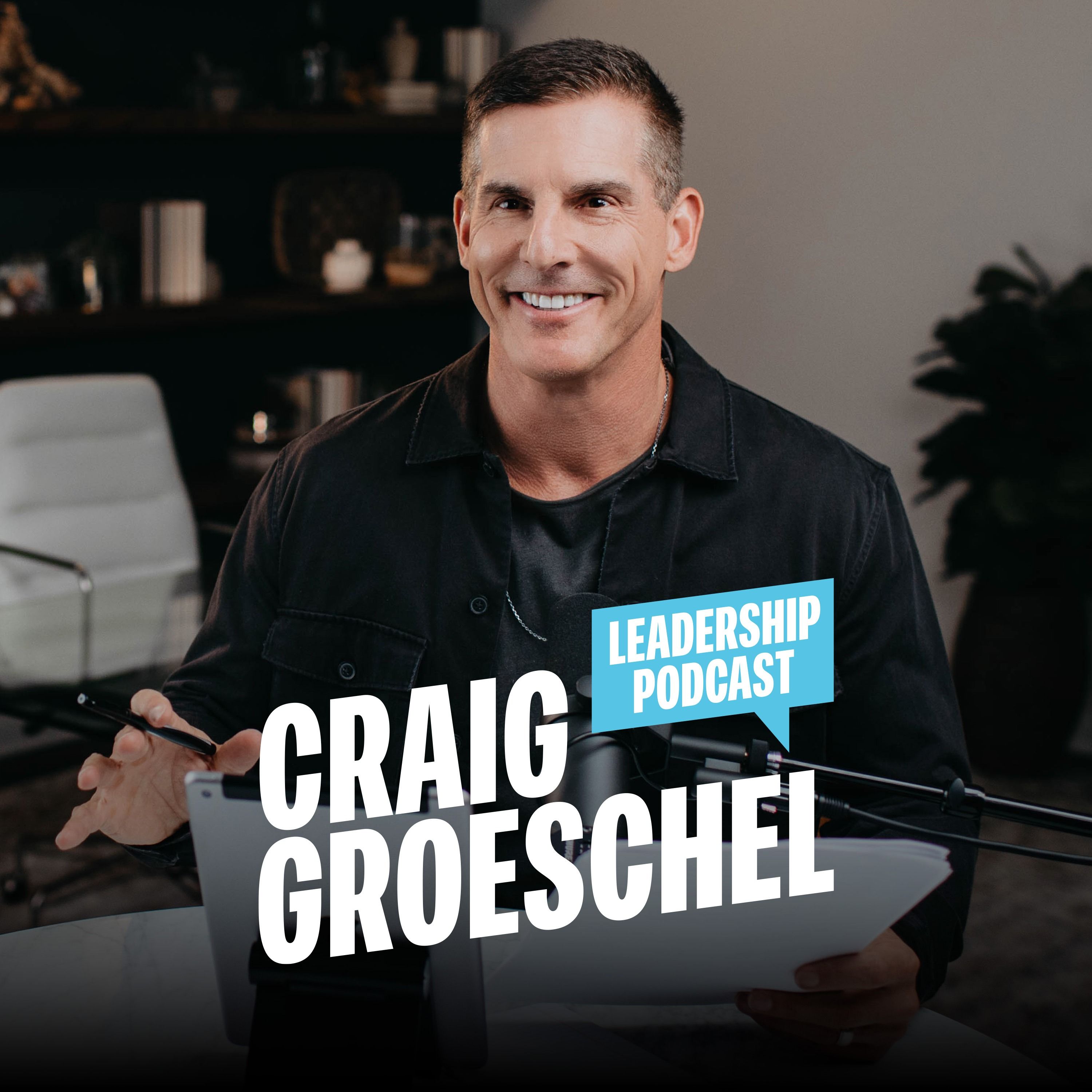
Craig Groeschel Leadership Podcast
Life.Church
Win At Home First
Cory M. Carlson
Wealthy and Well-Known Podcast
Rory & AJ Vaden
THE ED MYLETT SHOW
Ed Mylett | Cumulus Podcast Network
The Burn Podcast by Ben Newman
Ben Newman
GrowLeader Podcast with Chris Hodges
Chris Hodges